US vs Europe: The Engineering Battle of Car Seats
Why American seats are 80s "Sofas" while European models are 2026 Space Capsules?
(American car seat design: Engineered for supreme child comfort during long-distance highway cruising, prioritizing ergonomics for extended travel)
☕
Girls, let's have a quick coffee-break! ☕✨
"Which car seat is better?" is the same as asking: "What should I wear today?" If you're planning to lounge on a sofa with a book, you pick something soft and fluffy. ☁️ But if you're skiing down a mountain, would you wear a bathrobe? Of course not! You need a helmet and a rigid suit. ⛷️🛡️
American seats are those comfy plush sofas. Great for long, sleepy trips on straight roads. But European seats are high-tech space capsules. Because our streets aren't highways—they are "slaloms" between intersections. Let's talk about why your child needs a capsule, not a featherbed.
👇
System Alert: Activating Professor Mode 🧠⚙️
Enough "latte talk."
Gennady here — putting on the black gloves.
American Car Seats: Key Advantages vs. European Models
- Spacious design: Wider seat shell ("bowl") provides more room for the child, especially beneficial for larger or bulkier children and long trips.
- Enhanced comfort: Thick, plush padding and large cushioned inserts offer a «Lincoln sofa» level of comfort — ideal for long‑distance highway cruising, like a journey along Route 66.
- Extended weight range: These seats are often designed for larger children, extending the usable lifespan (some models support up to 55 kg / 121 lbs).
- LATCH system resilience and flexibility: According to manufacturer claims, the LATCH system handles high impulse forces more effectively than ISOFIX. Key advantages include:
- Higher resistance to peak loads (up to 29.5 kg / 65 lbs in some models, versus 18 kg for steel ISOFIX anchors/connectors);
- Flexible mounting angles suitable for vehicles with irregular seat geometries;
- Quiet operation (no audible "click" sounds during installation), helping to avoid waking a sleeping child and preventing rattling noises during travel in some vehicles.
Considerations and Potential Drawbacks
- Potentially lower side‑impact protection: The wider seat bowl may allow more lateral movement ("side play") during a side‑impact collision, potentially compromising safety.
- Installation challenges for some users ("fragile mom effect"): Proper LATCH installation often requires significant physical effort — for example, applying knee pressure to the seat while tightening the straps or exerting force to detach anchors deeply recessed in the vehicle seat. This can be challenging for petite individuals, elderly caregivers, or those without adequate physical strength. In contrast, ISOFIX provides an intuitive "click" confirmation, making the process more foolproof.
- The Chest Clip: Safety Alignment
Another critical divide between American (FMVSS 213) and European (R129 / i-Size) engineering is the plastic chest clip. While US manufacturers promote it as a feature to keep harness straps in place, the European child safety car seat system completely avoids using such an element.
During a high-speed frontal impact, this rigid plastic clip catches chest loads, pressing directly into the child’s sternum. Furthermore, European safety regulations strictly dictate that a child must be released from the seat with a single press of a single button. If an emergency occurs—such as a vehicle fire or water submersion—every split second counts. Fumbling with an extra chest clip in the smoke and panic is a fatal flaw. For this reason, European engineering does not apply chest clips, choosing pure kinetic geometry over extra plastic fixes.
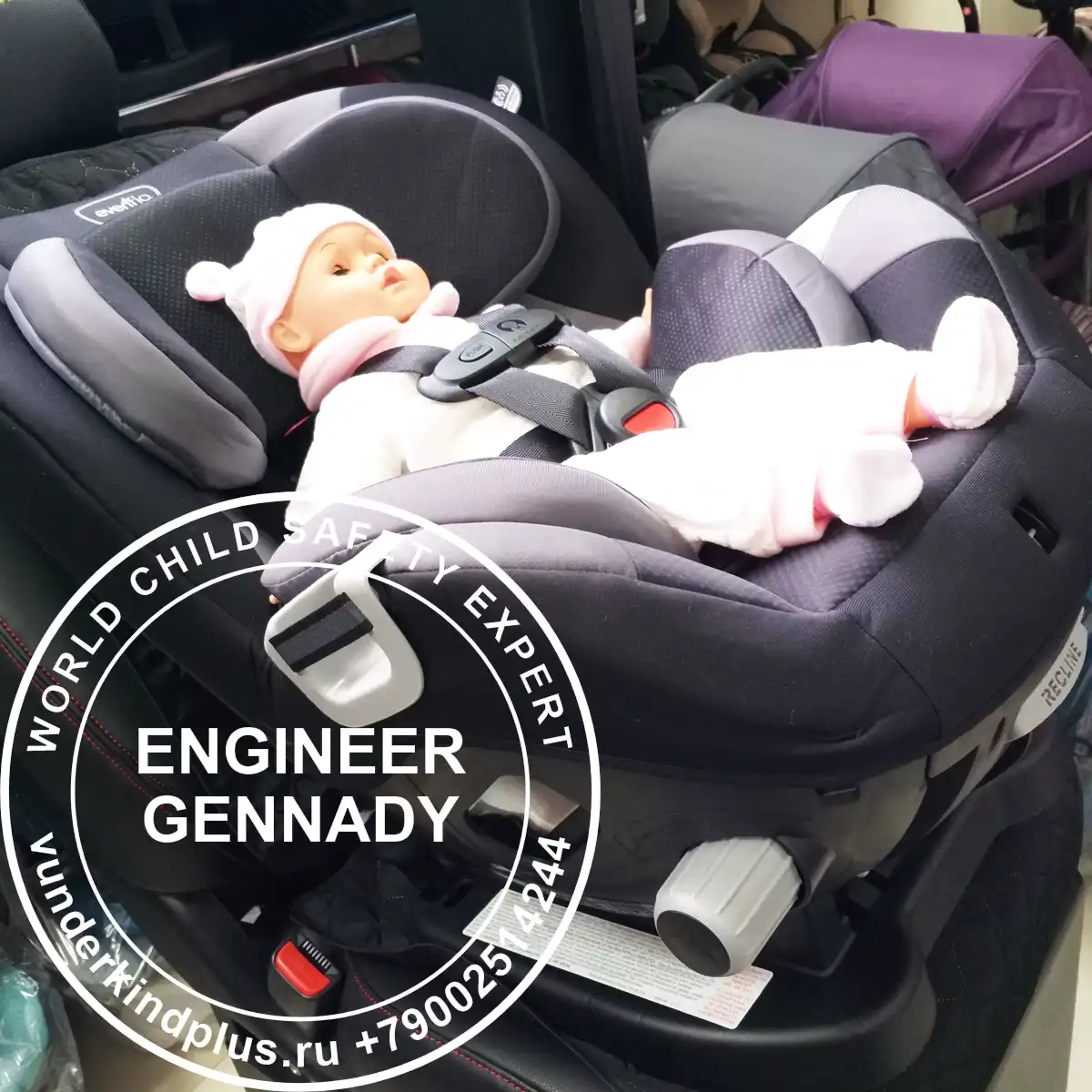
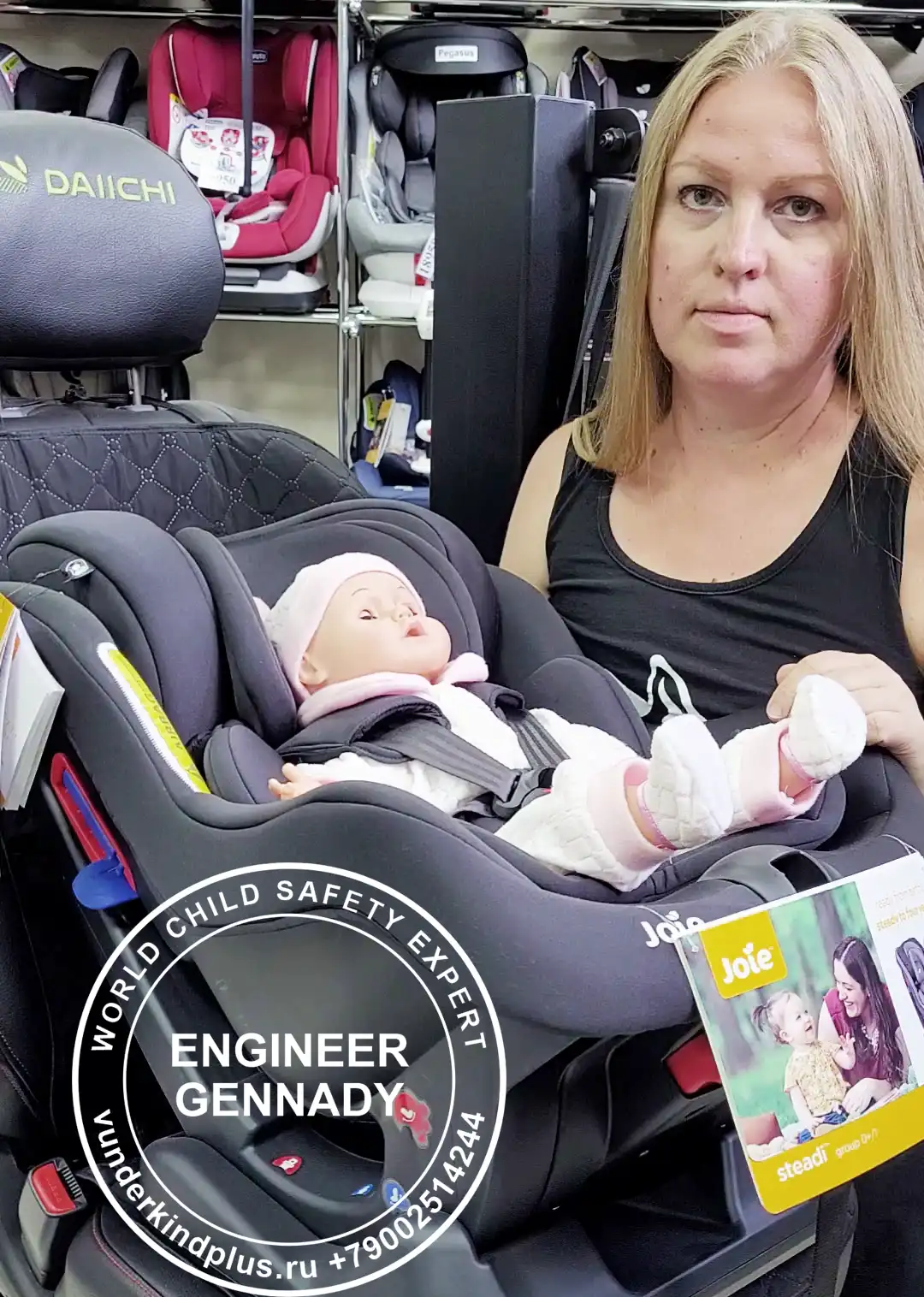
(Traditional US design: Focuses on spacious ergonomics and maximum seating comfort for long-distance travel.
European engineering trend: Featuring deep side wings and enclosed safety shells for enhanced protection in urban side-impact scenarios.)
The Palermo Factor: Why Side Protection is Non-Negotiable
On an American highway, collisions are mostly frontal. But in the tight alleys of Palermo or Rome, the threat is a "T-bone" at an intersection. There is no "crumple zone" on the side of a car—only a thin door between the impact and your child.
American FMVSS 213 standards have historically focused on front-end crashes. European i-Size (R129) was born out of urban necessity. It mandates rigorous side-impact testing with advanced biofidelic dummies + minimization of parental errors during car seat installation.
"In a side collision, there is no time for 'soft' absorption. You need a rigid shell that deflects energy. You need an engineering capsule, not a sofa."
This is why European seats feature deep side wings and SICT (Side Impact Cushion Technology). We aren't just cushioning the blow; we are creating a structural 'survival cell' for the cervical spine.
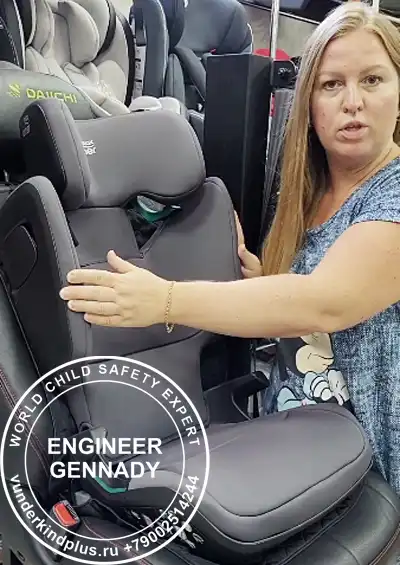
(A European car seat example with strong side protection for enhanced safety.)
Beyond the Box: The "Black Gloves" Engineering Audit
A car seat purchased online is a product — but its real safety potential depends on proper inspection and calibration. A car seat after professional audit is a calibrated safety system.
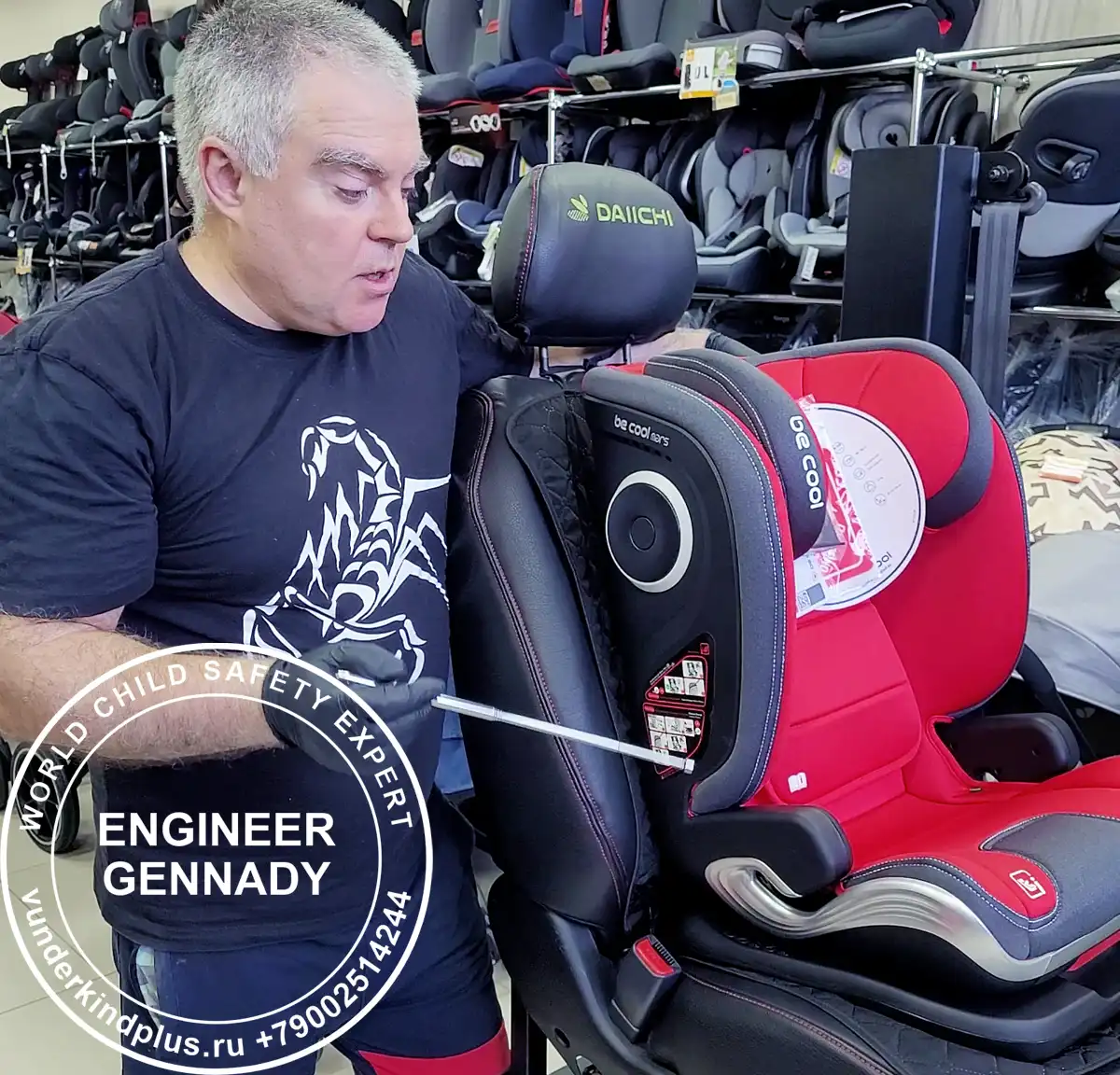
When you see my hands in black latex gloves in my videos, it’s not for show. It’s a symbol of surgical precision. Every seat undergoes a Specific Model Audit before it reaches a client:
- 🛡️ Pre-Sale Integrity Check: Looking for micro-cracks and assembly defects that "hollow marketing" ignores.
- ⚙️ Precision Fitting Process: we perform a custom fitting on a test bench to guarantee the car seat’s optimal alignment with the child’s body structure. This achieves a level of accuracy akin to the manufacture of an astronaut’s custom‑fitted seat pan
- 📐 Installation Consulting: "Physics doesn't lie"—if the angle is off by 5 degrees, the safety rating drops. I ensure it’s perfect.
- In safety engineering, even a millisecond delay in energy absorption can be critical. The ‘soft’ American seat possibly allows for excessive head excursion in a side collision. The rigid European shell, combined with high-density EPS, manages the kinetic energy vector before it reaches the child. It’s not about softness; it’s about energy management.
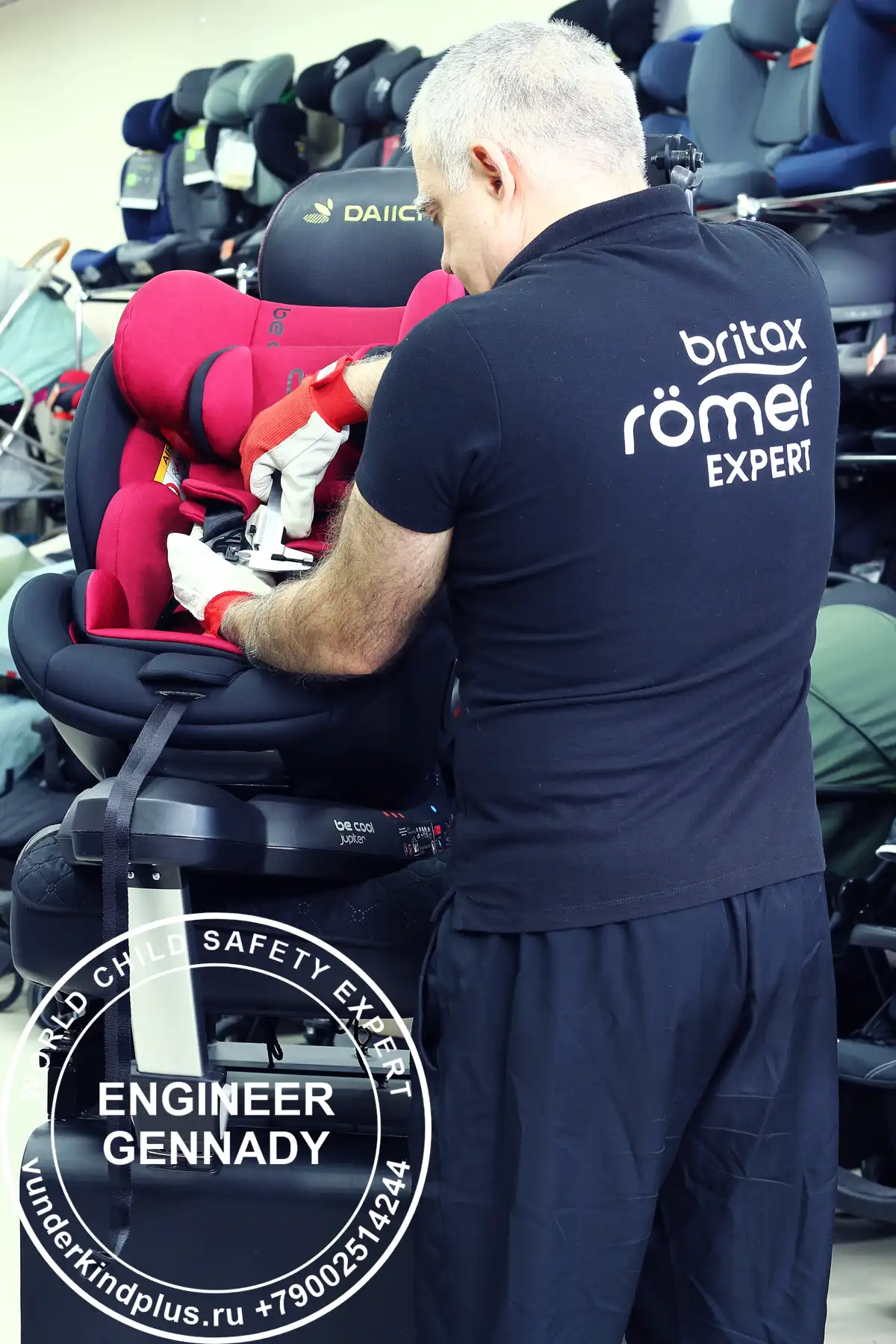
(Vunderkind Engineering Audit: Pre-Sale Safety Protocol)
Technical FAQ: Facts vs. Myths
Q: Why do European experts often recommend R129 (i-Size) seats over American models for local driving?
A: It’s a matter of environmental optimization, not a lack of safety. American seats (FMVSS 213) are brilliantly engineered for long-haul comfort and frontal impact management on vast highway networks. However, the European i-Size standard is specifically tuned for the "Urban Factor" — the high density of intersections and side-impact risks. European models prioritize rigid energy management and deeper side shielding, which is the preferred technical response to the geometry of European streets.
Q: What is the "Pivot Link" system in Britax-Römer seats?
A: As Engineer Gennady explains, Pivot Link is a patented mechanism that redirects the downward force of an impact into the vehicle seat, drastically reducing the forward movement of the child and protecting the neck.
Q: Why should I choose an Engineering Audit over a marketplace discount?
A: A marketplace sells a box. An Engineering Audit (The «Black Gloves» service) ensures that the seat is free from micro‑defects and perfectly tailored to both the child’s body structure and the geometry of your specific vehicle. Physics doesn’t lie: a 5‑degree angle deviation, excess lateral space inside the seat, or any play/slack can completely compromise safety.
Disclaimer: This article does not constitute official crash-test results or laboratory findings. All technical analyses and conclusions presented here are provided exclusively as the evaluative professional opinion of Engineer Gennady, based on 43 years of technical experience. Car safety is a complex field; always refer to your vehicle and car seat manuals.
© 2026 Engineer Gennady. World Expert in Child Safety. Pure Physics vs. Hollow Marketing.